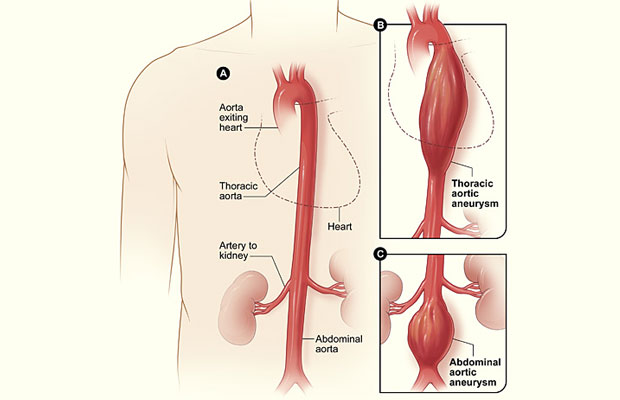
The aorta is the largest artery in the human body – a vessel the width of a garden hose that carries blood from the heart to the entire body. When this vessel begins to bulge (aneurysm) or tear (dissection), the result is one of the most dangerous emergencies in all of medicine.
In major cities, most people know to call an ambulance when they have chest pain and suspect a heart attack. But aortic dissection – which can present with similar or even more dramatic symptoms – remains largely unknown to the public. This gap in awareness costs lives in Thane, Kalyan, Bhiwandi, and across the MMR every year.
What is an Aortic Aneurysm?
An aneurysm is an abnormal bulging or dilation of the aortic wall. Aneurysms are classified by location: thoracic (in the chest), abdominal (below the diaphragm), or thoracoabdominal (spanning both). They are often silent, discovered incidentally on a CT scan done for another reason.
The danger: as an aneurysm grows, the risk of rupture increases dramatically. Rupture carries a mortality rate exceeding 80%. Elective surgical repair before rupture carries a far lower risk.
What is an Aortic Dissection?
Dissection occurs when a tear develops in the inner layer of the aortic wall, allowing blood to surge between the layers and create a false channel. This can block blood flow to critical organs – the heart, brain, kidneys, or legs – in minutes.
Warning Signs: Don’t Ignore These Symptoms
The classic presentation of aortic dissection is sudden, severe chest or back pain described as ‘tearing’ or ‘ripping’ – different in quality from typical cardiac chest pain. Other presentations include:
- Sudden severe pain between the shoulder blades
- Pain radiating to the neck, jaw, or abdomen
- Sudden loss of pulse in one arm
- Stroke symptoms – confusion, weakness, speech difficulty
- Collapse or loss of consciousness
Crucially, some patients present with vague or atypical symptoms and are initially misdiagnosed. In Thane’s busy emergency departments – which receive patients from Bhiwandi, Kalyan, and beyond – awareness of aortic emergencies among frontline staff is growing.
Risk Factors for Aortic Disease
- Uncontrolled hypertension – the leading risk factor, highly prevalent in Thane’s middle-aged working population
- Bicuspid aortic valve (a congenital condition)
- Connective tissue disorders (Marfan syndrome, Loeys–Dietz)
- Family history of aortic aneurysm or dissection
- Atherosclerosis (hardening of arteries)
- Cocaine use (causes acute hypertensive surges)
Surgical Treatment of Aortic Disease
For Aortic Aneurysm (Elective)
When an aneurysm reaches a critical size – typically >5.5 cm for thoracic or abdominal – or grows rapidly, surgical repair is recommended. Options include:
- Open surgical repair with a synthetic graft replacing the diseased aortic segment
- Endovascular Aortic Repair (EVAR/TEVAR) – a catheter-based approach with stent grafts, suitable for select anatomies, with faster recovery
For Acute Type A Dissection (Emergency)
This is one of the most technically demanding emergencies in cardiac surgery. The procedure involves replacing the ascending aorta, and often the aortic root, under cardiopulmonary bypass. Speed, expertise, and an equipped centre are non-negotiable. Dr. Saumya Sekhar performs these complex aortic reconstructions at Kims Hospital, Thane – meaning patients from Kalyan, Bhiwandi, Dombivli, and Thane city itself have access to emergency aortic surgical care without a dangerous delay in transport.
Post-Surgical Recovery and Surveillance
After aortic surgery, lifelong surveillance with annual CT imaging is essential. The remaining aorta remains at risk, and blood pressure control – the single most modifiable risk factor – must be maintained rigorously. Patients are counselled on target blood pressure, salt restriction, stress management, and the importance of not missing follow-up scans.
The Bottom Line for Thane Residents
If you or a family member has hypertension and has never had an aortic screening, speak to your physician.
“If you experience sudden severe chest or back pain – don’t wait, don’t drive yourself – call for emergency help immediately. The time saved can be the difference between life and death in aortic disease.”