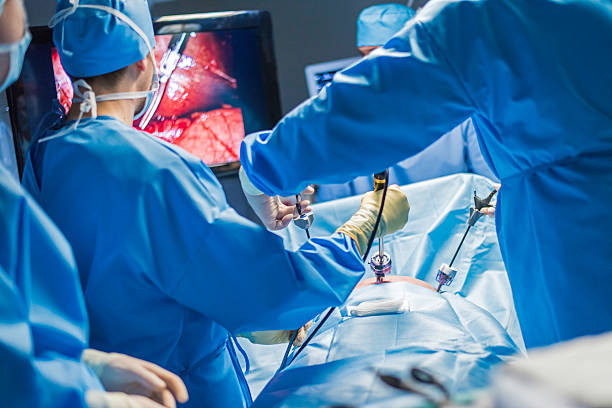
Best Minimally Invasive Heart Surgery in Thane
Book your appointment now with Dr. Saumya Jenasamant who provides the Best Minimally Invasive Heart Surgery in Thane. A safer and more effective option for patients than open heart surgery, minimally invasive cardiac surgery is a revolutionary development in cardiovascular treatment. Smaller incisions, usually 2-4 inches, are used in this sophisticated procedure as opposed to the 6-8 inch incision needed for open heart surgery. Surgeons use these tiny incisions to replace or repair damaged cardiac structures by inserting specialized tools and cameras. Atrial septal defect closure, coronary artery bypass grafting, and valve replacement or repair are examples of minimally invasive procedures. This strategy has the advantages of less blood loss, less scarring, and a lower chance of infection. Patients recover more quickly, usually returning to their regular activities in 2-4 weeks, and their hospital stays are shorter, usually lasting 3–5 days.
Furthermore, compared to open heart surgery, minimally invasive surgery lowers the risk of consequences like stroke and renal damage. Surgeons can execute intricate procedures with better results thanks to the precision and dexterity that advanced imaging technology and robotic-assisted systems provide. All things considered, patients in need of heart surgery have a life-altering alternative in minimally invasive cardiac surgery, which offers better safety, a shorter recovery period, and a higher quality of life. Therefore get in touch with us because Dr. Saumya Sekhar Jenasamant is known as one of the Best Minimally Invasive Heart Surgery in Thane.
Typical forms of minimally invasive cardiac procedures consist of:
a) Coronary artery bypass grafting with minimal invasiveness (CABG): Surgeons bypass clogged coronary arteries by making tiny incisions rather than opening the chest. Usually, thoracoscopic tools or robotic assistance are used.
b) Repairing or replacing the mitral valve: Surgeons use tiny incisions in the chest to replace or repair the mitral valve. In comparison to traditional open surgery, this technique can also be carried out robotically, which shortens recuperation time.
b) Replacement of Aortic Valve (TAVR): a less intrusive technique in which the broken valve is left in place and a new one is placed via a catheter, usually through a little incision in the chest or groin.
d) Closure of the Patent Foramen Ovale (PFO) and Atrial Septal Defect (ASD): These congenital heart abnormalities are fixed by making tiny incisions and sealing the heart hole with robotic or thoracoscopic methods.
e) Procedure for a Maze: This technique, which is frequently carried out through tiny chest incisions or catheters, disrupts faulty electrical signals in the heart by creating scar tissue. It is used to treat atrial fibrillation.
What Are The Risks
Although it has some advantages over open heart surgery, minimally invasive cardiac surgery is not risk-free. Despite the use of smaller incisions, bleeding during or after the treatment is one of the possible consequences. Rarely, severe bleeding can necessitate a second surgery or a blood transfusion. Another risk is infection, especially internally or at the sites of the incisions. Patients with compromised immune systems or underlying medical conditions may be more vulnerable, even though the risk is lower than with open heart surgery. We have Best Minimally Invasive Heart Surgery Specialit in Thane.
Complications related to the heart or lungs, like fluid accumulation in the lungs or irregular heartbeats (arrhythmias), can also happen. Following surgery, certain individuals, particularly those with underlying lung conditions, may get pneumonia. Due to blood clots or decreased blood supply to the brain during the surgery, there is a slight but significant risk of stroke. Blood clots can also form in other places, which can result in problems including pulmonary embolism.
If issues develop, surgeons may occasionally have to switch to open surgery, which could lengthen the recovery period. Anesthesia-related reactions might also happen, which can lead to dangers like allergic reactions or trouble breathing. Even so, when done by skilled surgeons, minimally invasive heart surgery usually leads to a quicker recovery and fewer overall complications than open heart surgery. Contact us now because Dr. Saumya Sekhar Jenasamant provides Best Minimally Invasive Heart Surgery in Thane.
Conclusion
Compared to open heart surgery, minimally invasive heart surgery has several benefits, such as shorter recovery periods, less pain, and fewer problems. Although there are some dangers, like bleeding, infection, and possible heart or lung issues, these are usually less than with open operations. With improvements in technology and surgical methods, this method remains a good choice for patients in need of cardiac surgery since it provides efficient care with fewer physical risks. Visit to our clinic now and consult with our Dr. Saumya Sekhar Jenasamant provides Best Minimally Invasive Heart Surgery in Thane.