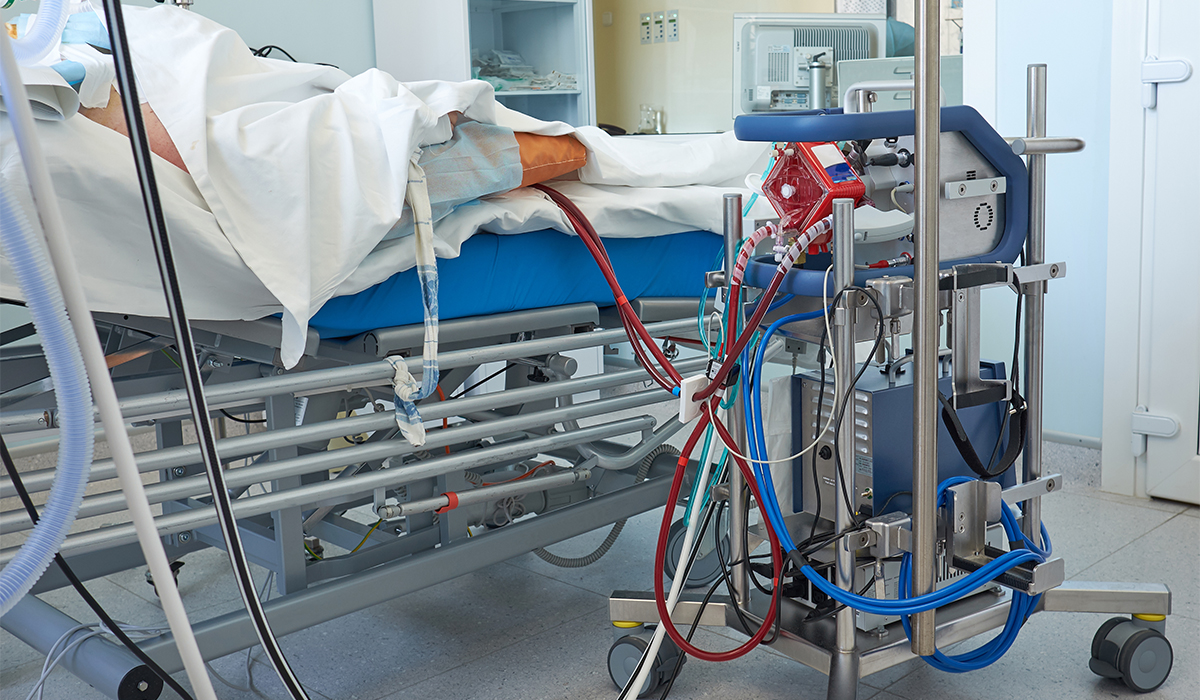
On a ward round in the cardiac ICU, you might see a machine quietly humming beside a patient’s bed – oxygenating blood outside the body, giving a failing heart or lung the time it needs to recover. This is ECMO: Extracorporeal Membrane Oxygenation.
It’s one of the most powerful tools in modern cardiac surgery, and its availability in Thane represents a significant advance for the region.
What is ECMO?
ECMO is an advanced form of life support that temporarily takes over the function of the heart, the lungs, or both. Blood is drawn out of the body, passed through a machine that adds oxygen and removes carbon dioxide, and returned to the body – bypassing the heart and lungs entirely if needed.
“Think of it as an external heart-lung machine – one that can run for days or weeks, rather than the few hours of a standard bypass machine used in surgery.”
When is ECMO Used?
Cardiogenic Shock
The most common cardiac indication. When the heart suddenly fails – due to a massive heart attack, fulminant myocarditis, or acute decompensation – the body goes into shock. Blood pressure collapses. Organs begin to fail. In this scenario, ECMO can stabilise the patient within minutes, buying time for diagnosis, decision-making, and intervention.
Bridge to Transplant
For patients in end-stage heart failure awaiting a donor organ, ECMO can serve as mechanical circulatory support – keeping them alive and stable long enough for a matched heart to become available.
Bridge to Recovery
In conditions like acute myocarditis (heart muscle inflammation, increasingly seen post-viral infections including COVID-19), the heart muscle may recover fully if given adequate rest and support. ECMO provides that support, allowing the heart to heal while the machine does the pumping.
Post-Cardiotomy Shock
Occasionally, after open heart surgery, the heart struggles to resume its function. ECMO can support the patient through this critical period until cardiac function recovers.
Severe Respiratory Failure
VV-ECMO (Veno-Venous) supports the lungs alone – oxygenating the blood when lung disease (severe pneumonia, ARDS) makes breathing inadequate even with maximal ventilator support.
ECMO in the Context of Thane’s Cardiac Emergencies
Cardiac emergencies don’t announce themselves. A 45-year-old from Bhiwandi presenting with a massive STEMI, a 32-year-old from Kalyan with fulminant myocarditis after a viral illness, or a 60-year-old from Dombivli deteriorating post-bypass – these are the patients who may need ECMO.
Having this technology, and the expertise to deploy it rapidly, at Kims Hospital, Thane means the critical first hours of a cardiac emergency are managed locally – without the danger of long transfers to South Mumbai or beyond.
VAD vs. ECMO: What’s the Difference?
While ECMO takes over both heart and lung function temporarily, Ventricular Assist Devices (VADs) are implantable pumps that support the heart long-term – either as a permanent solution (destination therapy) or as a bridge to transplant.
Dr. Saumya Sekhar is proficient in both ECMO management and VAD implantation – a rare combination of expertise within the Thane–MMR region.
Who Manages ECMO?
ECMO management requires a multidisciplinary team, working around the clock:
- Cardiac surgeons
- Intensivists
- Perfusionists
- Specialist ICU nurses
Complications – including bleeding, clotting, limb ischaemia, and neurological events – require expert monitoring and rapid response. The availability of this team at Kims Hospital, Thane is what makes ECMO a real option, not just a theoretical one, for patients in the region.