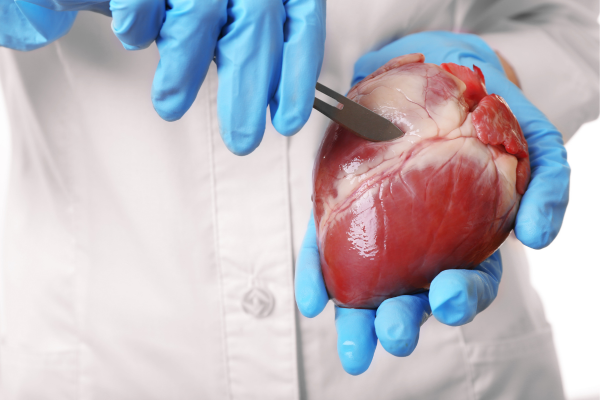
The heart has four valves – mitral, aortic, tricuspid, and pulmonary – each acting as a one-way gate that keeps blood flowing in the right direction. When one or more of these valves malfunctions, the consequences ripple through the entire cardiovascular system.
Valve surgery is one of the most commonly performed cardiac procedures, and for many patients in Thane and across the MMR region, it’s a life-saving intervention.
Types of Heart Valve Disease
Valve Stenosis
Stenosis occurs when the valve leaflets become thickened, calcified, or fused – narrowing the opening and forcing the heart to pump harder. Aortic stenosis is particularly common in older adults and is increasingly seen in the 55–70 age group in urban districts like Thane.
Valve Regurgitation (Leaking Valve)
Regurgitation means the valve doesn’t close properly, allowing blood to flow backward. Mitral regurgitation is the most common valve condition globally, and is frequently seen in patients with rheumatic fever – a disease still prevalent across Maharashtra’s working-class population due to inadequately treated streptococcal infections in childhood.
Which Valves Are Most Commonly Operated On?
Mitral Valve
The mitral valve separates the left atrium from the left ventricle. Mitral valve repair is the gold standard when technically feasible – it preserves the native valve, avoids the need for lifelong anticoagulation, and has superior long-term outcomes compared to replacement. Dr. Saumya Sekhar specialises in complex mitral repairs including annuloplasty, leaflet resection, and chordal reconstruction.
Aortic Valve
The aortic valve controls flow from the heart into the aorta. Severe aortic stenosis and regurgitation often require replacement rather than repair. Options include mechanical valves (lifelong blood thinners required) and biological, or tissue, valves (no long-term anticoagulation needed, but may require re-intervention after 15–20 years). For high-risk surgical patients, TAVI (Transcatheter Aortic Valve Implantation) – a catheter-based procedure – is increasingly available.
Tricuspid Valve
Tricuspid disease is often secondary to left-sided valve problems or pulmonary hypertension. It is frequently addressed simultaneously during mitral or aortic surgery.
Repair vs. Replacement: How the Decision Is Made
The choice between repair and replacement depends on several factors:
- The type and extent of valve damage
- The patient’s age (younger patients benefit more from repair or mechanical valves)
- Ability to take anticoagulation safely (relevant for choosing mechanical vs. biological)
- Presence of atrial fibrillation (a rhythm abnormality often corrected simultaneously)
- Surgeon’s expertise in complex repair techniques
“When repair is feasible, it is almost always preferred – especially for the mitral valve. A successful repair means no prosthetic material in the heart, no lifelong Warfarin, and a valve that performs like the natural one.”
Rheumatic Heart Disease: A Major Driver of Valve Surgery in Thane–Kalyan–Bhiwandi
Rheumatic fever, caused by Group A Streptococcal infection, damages heart valves over years, causing stenosis and regurgitation. It disproportionately affects patients from lower-income communities with limited access to early antibiotic treatment. Many patients presenting for valve surgery at Kims Hospital, Thane, from Bhiwandi, Ulhasnagar, and Ambernath, have rheumatic aetiology – often in their 30s and 40s, younger than their Western counterparts.
For this population, early detection through cardiac screening camps (echo-based) and timely valve repair or replacement can add decades of quality life.
Recovery from Valve Surgery
- ICU1–2 days post-surgery
- Hospital Stay6–8 days
- Return to Normal Activity6–8 weeks
- Follow-UpLifelong annual echocardiograms recommended
- AnticoagulationRequired for mechanical valves; not needed for biological valves after 3 months